U.S. and Saudi Arabia Sign Civil Nuclear Cooperation Agreement
AI-generated from linked reporting; may contain errors. Report an error.
Overview
The United States and Saudi Arabia have finalized a civilian nuclear energy agreement, with President Trump subsequently conditioning the deal's implementation on Saudi Arabia joining the Abraham Accords to normalize relations with Israel. The policy shift has sparked debate over U.S. nonproliferation standards and the geopolitical consequences of linking energy cooperation to regional diplomatic goals.
Where they disagree
- Whether the nuclear agreement includes or prohibits domestic uranium enrichment capabilities in Saudi Arabia
- Whether the deal prioritizes American corporate interests over international security and nonproliferation efforts
- Whether the inclusion of an Abraham Accords precondition constitutes a coherent diplomatic strategy or an erratic, reactive policy shift
Where they agree
- The United States and Saudi Arabia signed a 30-year civil nuclear cooperation agreement.
- President Trump declared that the implementation of the nuclear deal is tied to Saudi Arabia normalizing diplomatic relations with Israel.
- The negotiations involve high-level administration officials, including the Department of Energy.
- Experts have expressed concerns regarding the potential for nuclear proliferation and the risks of regional security instability.
Source Perspectives
Framing, emphasis, and tone labels are AI-generated interpretations of how each source covered this story — not direct quotations. Report an error.
Left
3 sources
Antiwar.comCritical of nuclear proliferation and the expansion of military-diplomatic infrastructure.
leans
Critical of nuclear proliferation and the expansion of military-diplomatic infrastructure.
FramingCritical of nuclear proliferation and the expansion of military-diplomatic infrastructure.
EmphasisThe potential for Saudi uranium enrichment.
ToneCritical
Democracy Now!Questioning the strategic motives behind U.S. foreign policy and the influence of regional actors.
strong
Questioning the strategic motives behind U.S. foreign policy and the influence of regional actors.
FramingQuestioning the strategic motives behind U.S. foreign policy and the influence of regional actors.
EmphasisThe prioritization of political opportunism over coherent nonproliferation strategy.
ToneCritical

The Young TurksCritical of the U.S. foreign policy establishment and its deference to Israeli political objectives.
strong
Critical of the U.S. foreign policy establishment and its deference to Israeli political objectives.
FramingCritical of the U.S. foreign policy establishment and its deference to Israeli political objectives.
EmphasisThe influence of corporate business interests and the geopolitical dangers of regional proliferation.
ToneOpinionated


Center / Mixed
2 sources
The Free PressGeopolitical realism emphasizing the importance of regional security architectures.
Geopolitical realism emphasizing the importance of regional security architectures.
FramingGeopolitical realism emphasizing the importance of regional security architectures.
EmphasisThe role of Saudi Arabia as a U.S. security partner.
ToneAnalytical
Coverage from this source
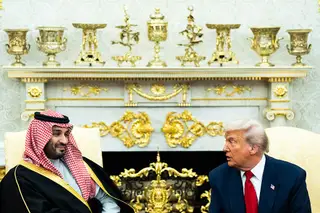
The HillFocused on the political friction, shifting administration demands, and official executive branch messaging.
Focused on the political friction, shifting administration demands, and official executive branch messaging.
FramingFocused on the political friction, shifting administration demands, and official executive branch messaging.
EmphasisThe impact of presidential decision-making and administrative coordination.
ToneNeutral
Coverage from this source

Right
5 sources
American GreatnessSupports the administration's actions as a strategic victory against geopolitical rivals.
strong
Supports the administration's actions as a strategic victory against geopolitical rivals.
FramingSupports the administration's actions as a strategic victory against geopolitical rivals.
EmphasisCountering the influence of China and Russia.
ToneSupportive
Coverage from this source
Just the NewsExamines administration policy conditions and the risks associated with international agreements.
leans
Examines administration policy conditions and the risks associated with international agreements.
FramingExamines administration policy conditions and the risks associated with international agreements.
EmphasisThe balance between policy goals and regional security.
ToneAnalytical
The American ConservativeFocused on the mechanics of the administration's bargaining tactics.
leans
Focused on the mechanics of the administration's bargaining tactics.
FramingFocused on the mechanics of the administration's bargaining tactics.
EmphasisThe usage of nuclear agreements as a diplomatic tool.
ToneNeutral
The Daily SignalFactual focus on the terms of the agreement compared to past regional standards.
leans
Factual focus on the terms of the agreement compared to past regional standards.
FramingFactual focus on the terms of the agreement compared to past regional standards.
EmphasisDiscrepancies in inspection requirements relative to other regional powers.
ToneNeutral
Coverage from this source
The DispatchSkeptical of the administration's foreign policy competence and the long-term security implications of the deal.
leans
Skeptical of the administration's foreign policy competence and the long-term security implications of the deal.
FramingSkeptical of the administration's foreign policy competence and the long-term security implications of the deal.
EmphasisLack of adequate nonproliferation safeguards.
ToneCritical
Coverage from this source
Editorial note: This synthesis is based on a representative sample of the cluster's coverage.