U.S. Gasoline Prices Surge as Conflicts in Middle East Intensify
AI-generated from linked reporting; may contain errors. Report an error.
Overview
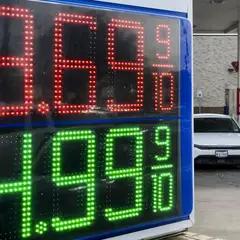
National average gasoline prices have climbed to four dollars per gallon amid renewed military hostilities between the United States and Iran. While the administration has sought to investigate retail pricing practices and pressure oil companies to lower costs, critics argue that current economic strain is a predictable outcome of foreign policy decisions.
Where they disagree
- Whether rising gasoline prices are primarily driven by geopolitical instability, corporate price gouging, or domestic state-level tax and regulatory policies.
- The extent to which current fuel cost trends are a byproduct of administration foreign policy versus independent market dynamics.
Where they agree
- Average national gasoline prices have reached four dollars per gallon.
- The executive branch has engaged in public pressure campaigns and legal inquiries regarding retail fuel pricing strategies.
- Hostilities involving Iran and the Strait of Hormuz are significant factors influencing the global and domestic energy market.
- There is a notable disparity between crude oil market prices and the retail costs paid by consumers at the pump.
Source Perspectives
Framing, emphasis, and tone labels are AI-generated interpretations of how each source covered this story — not direct quotations. Report an error.
Left
2 sources
Jimmy DoreFrames the situation as a systemic failure of leadership and foreign policy that disproportionately impacts working-class consumers.
strong
Frames the situation as a systemic failure of leadership and foreign policy that disproportionately impacts working-class consumers.
FramingFrames the situation as a systemic failure of leadership and foreign policy that disproportionately impacts working-class consumers.
EmphasisDownplaying of economic crisis by elites, the influence of foreign actors on U.S. policy, and the depletion of strategic resources.
ToneHighly critical.


Reason MagazineCritiques the administration's policy as a deflection of accountability for self-inflicted economic outcomes.
leans
Critiques the administration's policy as a deflection of accountability for self-inflicted economic outcomes.
FramingCritiques the administration's policy as a deflection of accountability for self-inflicted economic outcomes.
EmphasisGovernment responsibility and the failure of using private companies as political scapegoats.
ToneOpinionated.
Coverage from this source

Center / Mixed
2 sources
The DispatchExamines the disconnect between crude oil market data and consumer pricing, questioning the validity of price-gouging allegations.
Examines the disconnect between crude oil market data and consumer pricing, questioning the validity of price-gouging allegations.
FramingExamines the disconnect between crude oil market data and consumer pricing, questioning the validity of price-gouging allegations.
EmphasisMarket fundamentals and the distinction between political rhetoric and economic reality.
ToneAnalytical.
Coverage from this source
The HillFocuses on the interplay between political pressure, executive orders, and market explanations for energy costs.
Focuses on the interplay between political pressure, executive orders, and market explanations for energy costs.
FramingFocuses on the interplay between political pressure, executive orders, and market explanations for energy costs.
EmphasisGovernment response to inflation and the political push-pull between the administration and industry stakeholders.
ToneReporting and analytical.
Coverage from this source




Right
2 sources
Just the NewsEmphasizes the correlation between international conflict, specifically with Iran, and the direct impact on U.S. consumer prices.
leans
Emphasizes the correlation between international conflict, specifically with Iran, and the direct impact on U.S. consumer prices.
FramingEmphasizes the correlation between international conflict, specifically with Iran, and the direct impact on U.S. consumer prices.
EmphasisMarket volatility, foreign state actions, and the electoral consequences of energy policy.
ToneReporting and analytical.

Washington TimesHighlights the administration's efforts to utilize federal agencies and state attorneys general to address energy pricing.
leans
Highlights the administration's efforts to utilize federal agencies and state attorneys general to address energy pricing.
FramingHighlights the administration's efforts to utilize federal agencies and state attorneys general to address energy pricing.
EmphasisGovernment-led investigations and the strategic response to price hikes.
ToneReporting.


Editorial note: The provided coverage represents a mix of institutional reporting and ideological commentary, with perspectives ranging from administration-friendly economic analysis to deep-seated skepticism of U.S. foreign policy and executive influence.